

Search Disrupted Newsletter (Issue 30)
OpenAI introduces sponsored ChatGPT results, public skepticism of AI reaches new highs, transformers explained for marketers, NYT reporter lawsuit targets AI training practices, Canadian musician falsely accused of being AI-generated, and Instagram shifts to fingerprinting real content instead of fake.
ChatGPT gets closer to sponsored results
OpenAI’s inevitable ad based monetization of ChatGPT has yet to happen (Sam Altman seems content to continue shoveling VC money into the furnace for the time being) but leaked internal conversations, and app metadata suggest what’s coming is not too far off.
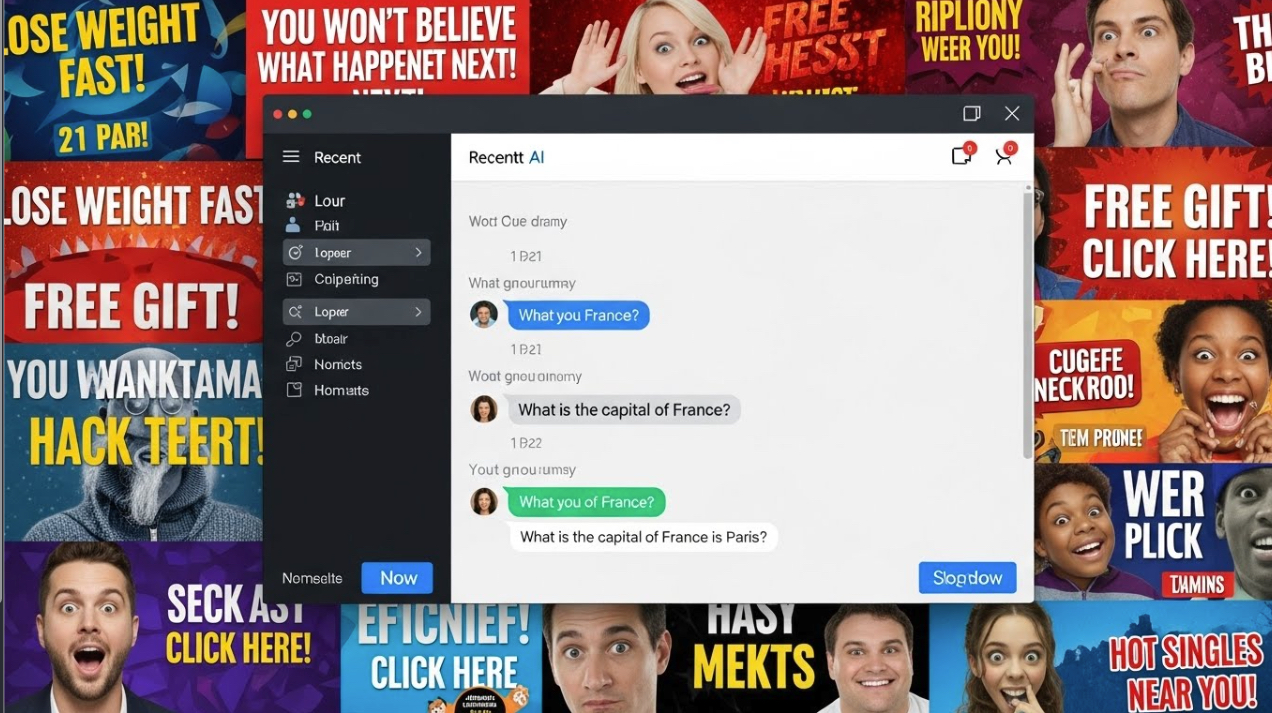
We had Nano Banana (Google’s AI image generation model) spin up the image below as a sort of worst case scenario about what this might look like.
And although it looks like an ad network vomited a nightmare fever dream over an AI chat transcript in some ways that UI is a best case scenario as at least it’s honest about the advertising being advertising.
Internal discussions point to the actual ChatGPT ads being a lot more subtle and potentially mixed in with organic answers (with a fig leaf of an FTC mandated “sponsored” label applied.)
The two formats currently under consideration are:
- Sponsored information inside the response. Branded product recommendations embedded in the response text.
- Separate sponsored modules as sidebars or footers.
My strong prediction is that the sponsored approach is going to be worth 10x the “banner” ad version to advertisers and while more permissive and potentially manipulative, it will also be more positively received by users simply because it’s less in your face.
Link: OpenAI ChatGPT Sponsored Ads
Americans want AI regulated
Most Americans, 78% of them, want stricter rules for AI. This feeling crosses all political divides. People are worried about losing jobs, about misinformation, privacy issues, and unfair decisions made by algorithms without clear reasons or accountability.
Personally, I think the way forward is less AI regulation and more digital privacy regulation and algorithmic transparency requirements.
The GDPR regulations in Europe are a good example of this where beyond enforcing things like consensual collection of personal data, they also mandate that you have the right to request how your information is used and to have a human review algorithmically generated decisions.
It’s far from a magic bullet, but it jumps past a lot of the frankly annoying discussions I see around AI regulations (just as an example, most of the proposed AI regulations would also apply to traditional search marketing activities like SEO and paid search, digital photography, etc.)
For search and brand marketers, I think this is an opportunity to build trust with your content. To make sure it’s saying the right things about your brand and products and that you’re meeting users where they are.
Link: Americans Have Mixed Views of AI and an Appetite for Regulation
What search marketers need to know about transformers
I’d bet that most people don’t know that the “GPT” in ChatGPT stands for “Generative Pre-trained Transformer”.
Despite what Optimus Prime might have to say about it, today “transformer” is a term that refers to a type of AI model architecture that the underlying AI models in ChatGPT, Gemini, Claude, and Perplexity are built on.
And if you can get a better understanding of how they work, you have a fantastic foundation for better understanding how to optimize your content for AI search, where the boundaries of what’s possible are and why so much of the “hot takes” on SEO subreddits about AI search are so often wildly wrong.
Which is why I’m recommending you read Jay Alammar’s “Illustrated Transformer” guide which explains how they work with clear pictures and simple language.
The main point is this: transformers are good at finding patterns. They learn what “good answers” look like by studying billions of examples. If your content matches the patterns of helpful, authoritative answers, you’ll succeed.
Link: The Illustrated Transformer
A real musician was called AI
Ashley MacIsaac, a Canadian fiddler with a 30-year career, was accused of being AI-generated. Not his music, but him, the actual person.
The rumor spread on social media. People looked at his photos for signs of AI. They wondered if his music sounded “too perfect.” They even pointed to small online inconsistencies as proof. None of it was true, but it still hurt his reputation.
AI-generated content is so common now that people often assume real things are fake. We used to say “pics or it didn’t happen.”…but honestly now I’m at a loss of what we will say. “Meet me at the corner of main street and tell me you’re not AI.”?
In the context of marketing, I do feel this raises real questions about what “authenticity” means. In our own work (like our newsletter and social posts) we’re taking the approach that it’s less about the exact authorship and more the message, point of view and consistency that matter.
Link: Canadian Fiddler Falsely Accused of Being AI

NYT reporter sues over AI training data
A New York Times reporter has filed a personal lawsuit against AI companies. This case is about how AI models were trained, not just what they produce. It’s separate from the Times’ own corporate lawsuit.
Most AI copyright lawsuits focus on the AI’s output. They ask if the AI copied copyrighted material. This new lawsuit looks at the training process itself. It questions if AI companies had the right to use copyrighted work to train their models in the first place.
If using copyrighted material for training without permission is illegal, the entire AI industry faces a huge problem. Most AI models were trained on vast amounts of web data, including copyrighted content. This applies to companies like OpenAI, Google, Anthropic, and Meta.
These companies argue that this is fair use. They say training is a transformative process. But the other side argues it’s massive commercial exploitation. They point to billion-dollar businesses built on the work of creators who never agreed to it or got paid.
For search marketers, the outcome of this case will shape the future of AI search. If the plaintiffs win, AI companies might need to license training data. This could slow down AI development and create new ways for publishers to make money.
Link: New York Times Reporter Files Lawsuit Against AI Companies

Instagram will verify real content, not detect fakes
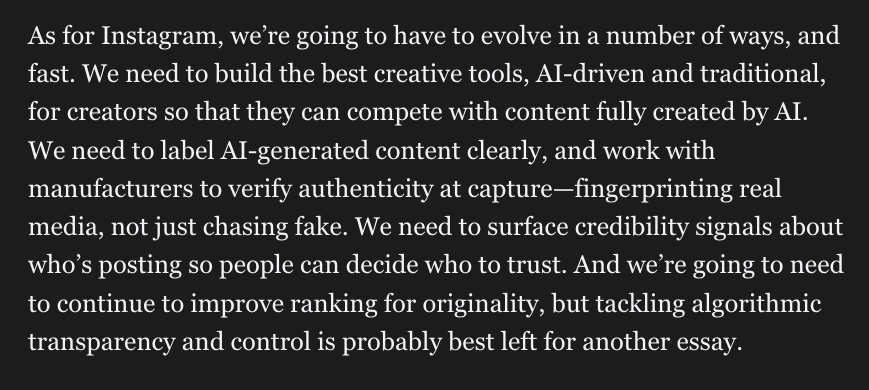
Instagram’s head of product recently didn’t exactly say that it would be easier to “fingerprint” real media than to try and spot fake media, but he acknowledged that trying to detect AI-generated content is a losing battle.
He’s surprisingly nuanced and candid in his Threads post about the future of Instagram’s relationship with AI content and the tension between crafting a perfect little square image and it being a little too perfect.
Link: Instagram Chief: AI is So Ubiquitous, It Will Be More Practical to Fingerprint Real Media
New Guides and Resources
We’ve been busy creating practical guides to help you navigate AI search. Here’s what’s new:
The B.I.S.C.U.I.T. Framework - Our comprehensive framework for winning in AI search engines like ChatGPT, Claude, and Perplexity. This breaks down the exact steps to get indexed, ranked, and discovered across all major AI platforms. It’s a living document that we just refreshed with new examples and references.
The Myth of AI Search Unoptimizability - Debunking the claim that AI search can’t be optimized. AI search results are predictable. You can influence them strategically.
Sources and Citations in AI Search - Understanding how AI search engines use sources and citations, and how to optimize your content to become a cited reference instead of just background noise.
All guides are free and based on what we’re seeing across thousands of queries in our monitoring platform.
Thanks
Thanks for reading. We’re back on schedule after the holidays. I’d love to hear what you’re seeing in AI search as we head into 2026. Hit reply and share your observations.


p.s. It would really help me out if you could Follow me on LinkedIn