

Search Disrupted Newsletter (Issue 28)
Google starts testing ads in AI Mode, ChatGPT launches shopping assistant and group chats, OpenAI ads leak confirms monetization plans, readers prefer AI-generated content in blind study, Claude's soul document reveals personality engineering, and EU AI Act enters enforcement.
Google starts testing ads in AI Mode
Google is now testing ads in AI Mode. Which we’ve all seen coming, so this, while this was in no way unexpected, it is interesting that they’ve started into it ahead of ChatGPT and Claude.
And while the rest of the internet has calcified into IAD approved banner sizes, Google is putting sponsored content right into AI Mode answers (similar to how shopping ads show up in regular search).
To the searcher, it’s pretty subtle, and it looks like the AI is suggesting a few more things.
For search marketers, this dials up the difficulty yet again. You’re not just trying to get mentioned in AI responses anymore. Now, you’re also competing with advertisers who pay to be there.
My hypothesis is that AI search ads will work much better than old-school search ads in terms of influence, but they’ll also cost commensurately more.
Not only is the targeting insane, but it’s going to feel like a trusted friend giving advice.
Link: Google Starts Testing Ads in AI Mode
OpenAI ads leak confirms ChatGPT monetization plans
A leaked document confirmed what many already thought: OpenAI plans to show ads in ChatGPT.
Leaked: Ads appearing in conversations Sponsored suggestions Potentially ads for Pro users
This timing makes sense (Google’s doing it, why not OpenAI).
OpenAI is spending billions on shiny new data centers, and subscription revenue isn’t covering it.
But what’s interesting to me is that even Pro subscribers, who pay $200 a month, might see “app suggestions,” which are really ads.
For search marketers, this is a huge chance. But I worry about the trust issues: what makes the targeting so juicy is that people are going way beyond “searching” with these AI services, they’re a constant sounding board, a kinda/sorta therapist and a confidant for many.
But things will get dark fast if every time you share a detail about your life, the AI slides in with a product pitch.
My guess is OpenAI will have a harder time with ads than Google does based solely on this user experience level. ChatGPT feels so personal and conversational that it’s going to make ads feel more intrusive. People put up with ads in search results. They’ll hate them in conversations.
Link: OpenAI Ads Leak

ChatGPT group chats roll out to everyone
ChatGPT now offers group chats to everyone. This means multiple people can talk with the AI together. It’s a bigger deal than it sounds.
Before, ChatGPT was just for one person. You asked questions, it answered, and your chats were private. Now, you can invite teammates, clients, or others to a shared ChatGPT session. Everyone can see the chat history and add to it.
We’re seeing a shift in the “center of gravity” for decisions away from traditional office tools toward something more closely tied to search, and I think that will further increase the value of search marketing.
Link: ChatGPT Group Chats

The DoorDash problem: AI agents and the web
The Verge had an interesting talk about what they call “The DoorDash Problem,” aka what happens when AI agents act for you online, and things go wrong.
DoorDash drivers are independent workers who deliver for customers. But things constantly go wrong: Mixed up orders Spilled food The driver took a bite out of your sandwich
Who is to blame? The driver? DoorDash? The customer?
AI agents create the same issue, but on a larger scale.
If Perplexity’s shopping agent buys something on Amazon without permission, who is responsible?
The customer? Amazon? Perplexity?
This is really coming to a head, with more and more AI browsers and automated research and buying agents springing up every day.
For search marketers, this matters a lot. AI agents are becoming the main way users interact with brands. You’re not talking directly to customers anymore. You’re dealing with AI helpers who might misunderstand, make errors, or do things the user didn’t mean to.
Brands that create clear, AI-friendly ways to handle agent transactions will clearly be at an advantage going forward.
Link: The DoorDash Problem

Gemini’s personal context feature goes live
Google just launched a personal context feature for Gemini. This lets the AI remember what you like, your projects, and past chats. It then gives you more personalized answers.
This is like ChatGPT’s memory feature, but with a key difference. Gemini can use information from your whole Google account. That includes Gmail, Calendar, Drive, and your search history. All of this helps Gemini personalize its responses.
For search marketers, this brings an interesting challenge. You’re not just optimizing for general user needs anymore. You’re optimizing for an AI that knows precisely what each person cares about, which brands they like, and what issues they’re trying to fix.
To win, you need a strong, consistent brand presence everywhere. If someone emails about your brand, searches for your product type, and reads your content, Gemini will pick up on that. The next time they ask for a suggestion, your brand will be the first thing the AI thinks of.
Link: Gemini Personal Context
Readers prefer AI-generated content in blind study
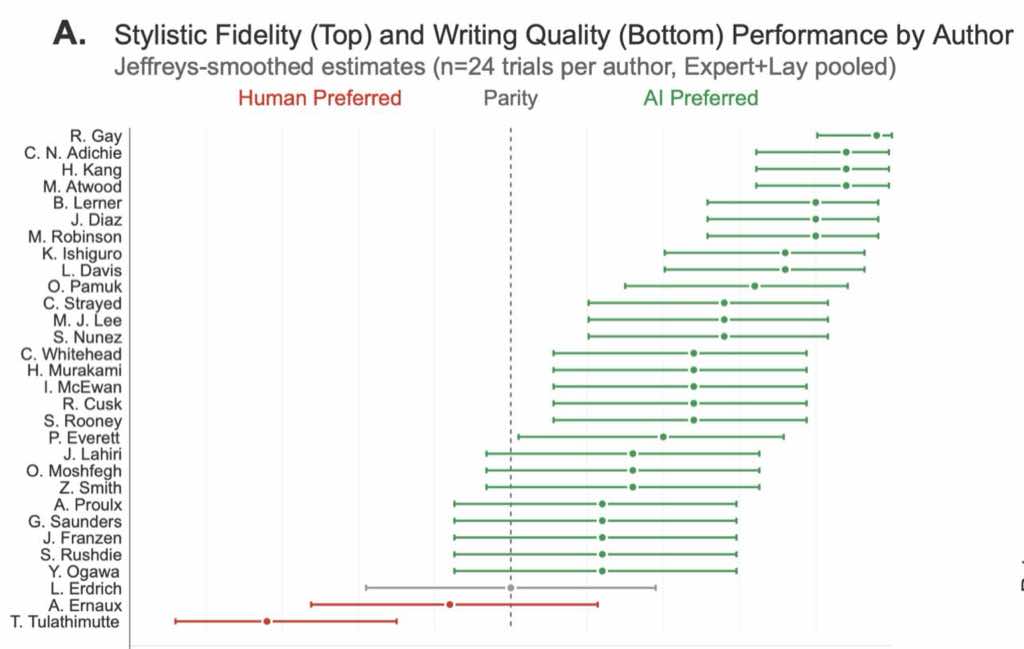
A new study from MIT and Columbia found something pretty shocking.
Readers actually prefer content written by AI, as long as they don’t know it’s AI.
In the study, people read articles and rated them on how clear, helpful, and engaging they were (though notably not “entertaining”).
AI-generated content consistently scored higher than human-written content. But when readers learned the content was AI-generated, their ratings tanked.
This shows two things. First, AI truly makes content that readers value. The days of poorly spun AI content are behind us.
Second, people, consciously or not, imagine an “author” telling us a story, and the presence of AI writing betrays that, introducing negative feelings, even when it’s objectively better. AI is the trust killer for emotion.
For marketers and content creators, this brings up a tricky ethical question. If AI content works better, should you use it? And if you do, should you tell people it’s AI-generated?
Link: MIT Study on AI Content Preference
Claude’s soul document reveals personality engineering
Simon Willison took a close look at Claude’s “soul document.” This is an internal prompt that sets Claude’s personality, how it talks, and how it makes decisions. It’s really interesting to see how AI personalities are built.
The soul document clearly tells Claude to be curious, thoughtful, and humble. It explains how Claude should handle uncertainty by admitting it rather than guessing. It sets the tone to be conversational but exact. It even says when to challenge users and when to agree with them.
What stands out is how intentional this all is. Claude’s personality didn’t just happen. It was designed, tested, and improved with clear instructions.
For search marketers, this shows an important aspect of AI search. Every AI has a personality, and this affects what it suggests. Claude’s soul document says to be balanced and to consider different viewpoints. So, brands that offer detailed, well-thought-out arguments might do better with Claude than those that use hype or overly simple ideas.
Knowing how different AIs are “programmed” to think and talk gives you an advantage in optimizing for them. It’s more than just keywords. It’s about aligning with the AI’s decision-making process.
Link: Claude Soul Document Analysis
Thanks
Thanks for reading and for all your thoughtful replies to these newsletters. I’d love to hear more of any stories or thoughts you’d care to share. Hit reply and let me know.


p.s. It would really help me out if you could Follow me on LinkedIn