

Search Disrupted Newsletter (Issue 41)
ChatGPT can now read your Yelp page: OpenAI's licensing deal pulls reviews, ratings, and quote requests into local answers. Plus Gemini closes in on a billion users, and Google and Anthropic both open up their AI-usage data.
ChatGPT can now read your Yelp page
OpenAI signed a non-exclusive licensing deal with Yelp, so ChatGPT can now pull Yelp reviews, ratings, photos, and business details into its answers, plus a “Request a Quote” flow for contacting a local service provider without leaving the chat. Yelp content shows its branding and links back, though OpenAI controls the presentation. No financial terms were disclosed, and CEO Jeremy Stoppelman framed it as a win for consumers.
Read it as OpenAI planting a flag in local search, the arena Google Maps and the local pack have owned for a decade. ChatGPT has always been weak on “find me a plumber near me,” and licensing Yelp’s review corpus, ratings, and photos is a direct move to close that gap rather than a side feature. That is the whole category of high-intent, ready-to-buy queries, and ChatGPT is now positioned to answer them without ever sending the user to Google. For any business with a storefront or service area, your Yelp presence just became ChatGPT ranking material.
The takeaway for search marketers: your next local lead may arrive as ChatGPT quoting your Yelp page, not a click from Maps. Claim the profile, keep reviews and photos current, and treat Yelp as an AI-answer surface.
Link: Yelp Brings Its Reviews And Ratings To ChatGPT
A Billion AI Search Users
Google reported Gemini at 950 million monthly users in Q2 2026, up from 750 million in February and tripled year over year, with 137 million iOS downloads in 12 months. Its AI-assistant share is now 27.7%. For context, ChatGPT crossed a billion monthly users in June while its own share slipped below 50% for the first time.
Separately, Google’s AI-centric Search mode, the one that reshapes what shows up when someone Googles you, crossed a billion users of its own in Q2. That’s the number that matters for visibility work: it’s the default answer layer on top of Search. Sundar Pichai credited agentic features like Daily Brief and the personalized Gemini Spark agent, each a new place a machine decides whether your brand gets mentioned.
To me and to other search marketers, Gemini and Google’s search modes are the clearest path away from traditional search and to the new normal of users relying on agentic search tools to find answers to their problems and get recommendations.
Link: Google’s Gemini Nears Billion-User Milestone
Google Study Shows More Search Than Automation
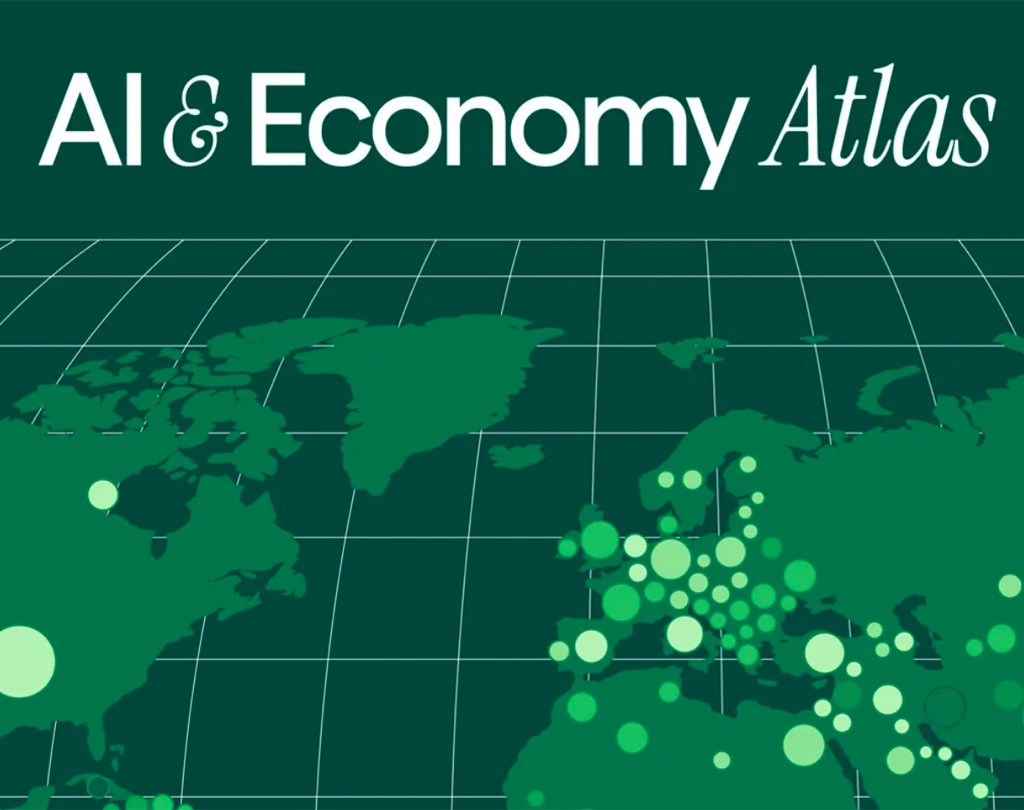
Amid the billion-user headlines, Google published its first ATLAS report, a study of 15 million de-identified human-AI interactions across 150+ countries, 140 languages, 800 occupations, and 4,000 tasks. It’s a rare first-party look at what people actually do with AI, and the pattern is consistent: they ask questions and look things up far more than they hand off whole jobs.
Adoption reaches 68% of occupations (90% of US employment), but within a given job AI handles only about 21% of tasks, and fewer than 10% of work interactions involve full automation. “Task automation is uncommon,” Google writes. The same shape shows up wherever you slice the data. Over 86% of interactions happen outside the workplace, things like household research or figuring out an appliance error code. English is only about a third of conversations, and adoption tracks GDP per capita. Across countries, occupations, and industries, the dominant mode is a person asking and AI answering, not a person stepping away.
The takeaway for search marketers: businesses lean on AI the same way, as a search assistant that researches, compares, and recommends. People use it to research purchases and answer the everyday questions that used to be a Google search. That question-and-answer behavior, broad and consumer-first, is what decides whether your brand gets recommended.
Link: Understanding the AI Economy (Google’s ATLAS report)
Anthropic makes its AI-usage data something you can just ask about
Right on the heels of ATLAS, Anthropic shipped a connector that lets anyone query the Anthropic Economic Index in plain language inside claude.ai. The Index tracks how people and businesses actually use Claude: which occupations and industries lean on it most, which tasks get automated, and how that shifts by region and over time. Enable it from the connectors menu, ask “what does the Index say about my industry?”, and drill into the underlying datasets from there. The built-in caveat is that it reflects Claude usage, not the whole labor market.
A conversational interface over a dataset is also a strong way to do research. You can pull together and cross-reference different sets of information in one place, ask follow-ups as they surface, and enrich one source with another instead of manually stitching spreadsheets and reports together.
The takeaway for search marketers: this is a pattern worth copying for your own material. Take your studies, reports, datasets, and documentation and make them conversationally queryable the way Anthropic just did with the Economic Index. Your audience gets to interrogate your data instead of skimming a PDF, and your content becomes an interactive asset. The same wiring doubles as a research tool for you and your readers, which is what makes the effort pay off.
Link: Ask Claude About the Anthropic Economic Index

Thanks
Thanks for reading. These take real time to put together and the replies are what keep them going. Hit reply and tell me what you’re seeing on your dashboards.

