

Search Disrupted Newsletter (Issue 34)
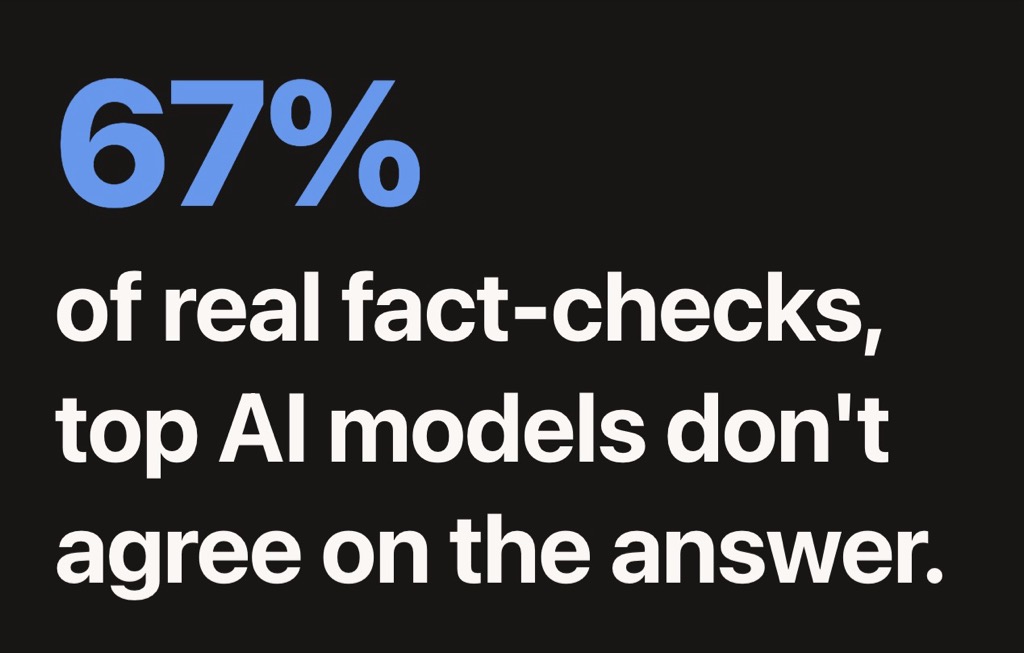
How to get your site recommended via YouTube. Microsoft Clarity's free Share of Authority. SEL on brand depth. Google's AI shopping tracker. AI models disagree on 67% of fact checks. Google's Preferred Sources and Highly Cited badges.
Report: Maximizing YouTube for AI Visibility
We all know that YouTube is good for search and AI visibility, but until now that’s been very abstract. Our new report turned up exactly the factors that make or break a video from appearing in, or influencing, AI search results.
Two of many surprises:
- Channel size barely matters. Some of the smallest channels in our data, under 20 subscribers, are getting cited dozens of times.
- Perplexity treats YouTube as its #1 source. ChatGPT ranks it #47. Search continues to fracture as different services take their bite.
The full report covers what works best: long-form vs. short-form formats, content considerations, deep linking, and where the most impact can be found.
Link: How AI Search Cites YouTube in 2026
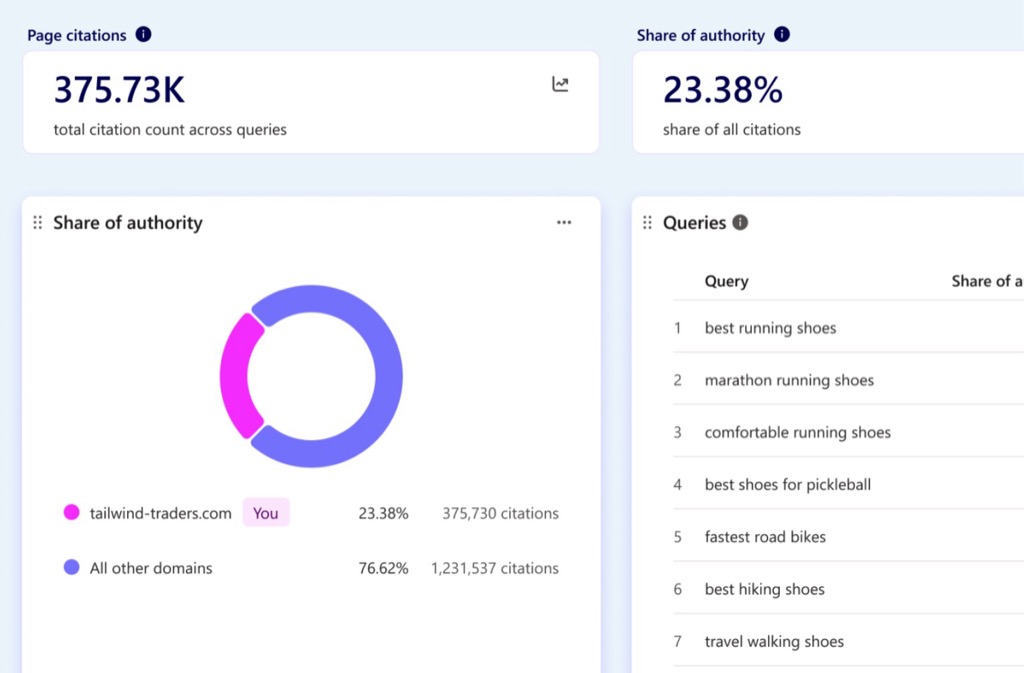
Microsoft Clarity (which you didn’t know existed) now reports on your AI Share of Authority (which you should care about)
Microsoft Clarity is a free behavior analytics tool. Session recordings, heatmaps, scroll depth, rage clicks, dead clicks. Closer in spirit to Hotjar or FullStory than Google Analytics.
Which makes the new AI Citations Share-of-Voice dashboard a somewhat weird addition, since Clarity is otherwise a qualitative tool.
You get total page citations with trendlines, Share of Authority, AI referral traffic, the grounding queries AI systems used, and a URL-level breakdown of cited pages.
Two catches:
- It only covers Microsoft’s surfaces: Bing AI, Copilot, and Bing’s AI Mode-style experiences. Nothing about ChatGPT, Perplexity, Google AI Overviews, Gemini, or Claude. The 12.39% Share of Authority screenshot going around r/SEO is 12.39% of one slice of one platform.
- It doesn’t give you guidance on what to do next. That’s where Knowatoa comes in: we uncover what your competitors are doing, where the gaps are, and help you generate content to close them.
Still, it’s free, accurate for its scope, and gives an interesting POV. Potentially worth adding to your site.
Link: Understand Your Influence in AI Answers: Citations Now Generally Available
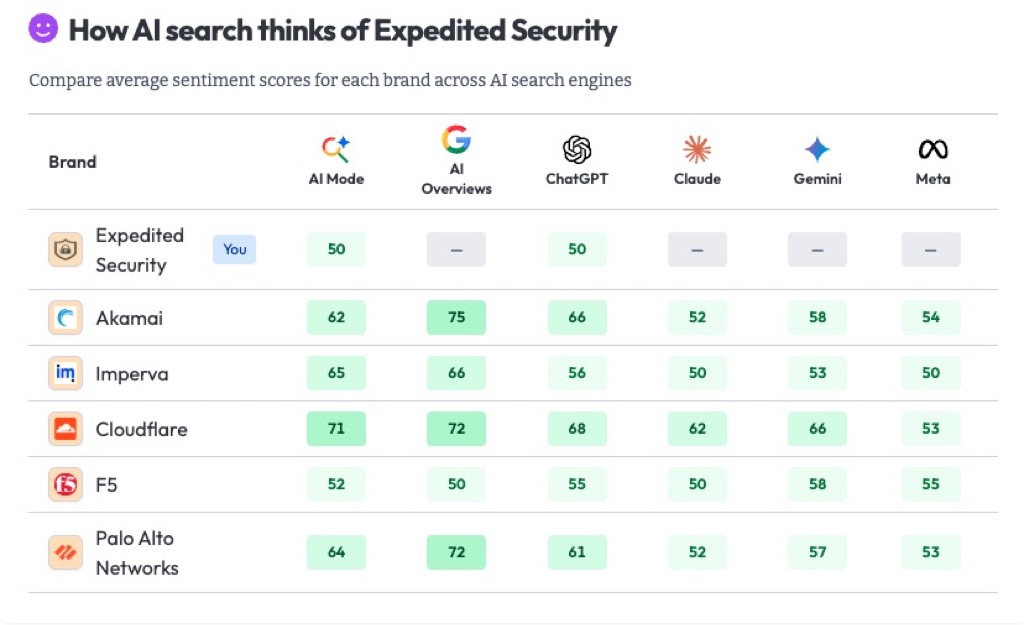
More Proof That It’s Sentiment And Citations
Myriam Jessier wrote a deliciously technical article arguing that AI visibility depends on “brand depth” (the density and interconnectedness of signals across the web), rather than citation frequency alone.
This aligns with our core recommendation that for search visibility in 2026 you need to be doing both:
- Have content that answers the questions people are actually looking for.
- Have positive sentiment with the AI service (a.k.a. brand depth), so your brand makes it through the filter to the actual user.
Each of the different AI search services pulls citations into their systems differently, whether through query fanouts or just adding them into the context of the user’s question. It’s becoming imperative that your brand is seen as trustworthy, responsible, and authoritative.
Which is exactly what Knowatoa’s sentiment analysis can tell you, along with concrete steps to improve.
Link: Brand depth determines what AI systems recommend
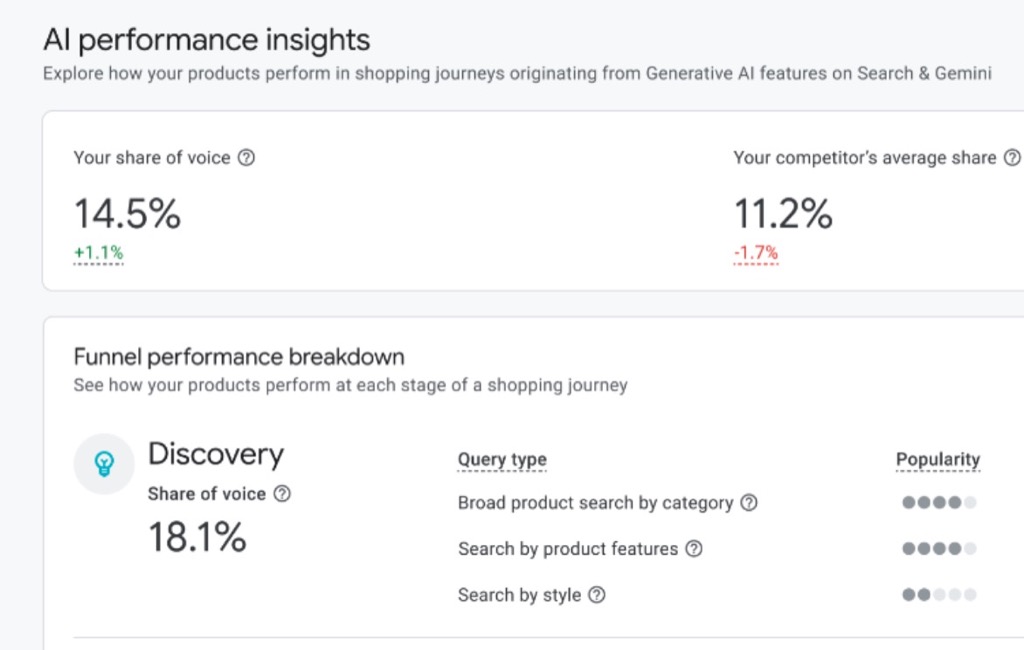
Google ships an AI visibility tracker for shopping
Google is rolling out AI performance insights inside Merchant Center: share-of-voice benchmarking, funnel performance across discovery/evaluation/purchase, popular conversational product queries, and gaps in product attributes (color, material, style) that hurt visibility. Rolling out “in the coming months” to U.S., Canada, Australia, India, and New Zealand advertisers first.
A couple of takeaways. Merchant Center is officially becoming an AI commerce optimization tool, not just a feed manager; completeness and conversational discoverability now matter for product feeds the way they do for SEO content. And Google is implicitly conceding that “share of voice in AI shopping” is worth tracking, validating the category.
Same scope limit as Clarity above: it only shows you Google’s slice. It won’t tell you how often your product comes up in ChatGPT or Perplexity. Useful tool, partial picture.
Link: Insights for AI-powered shopping experiences coming soon
Five frontier AI models disagreed on 67% of fact-check claims
A study from lenz.io ran 1,000 real-world fact-check claims through five frontier AI models. They disagreed on the verdict 67% of the time.
Example claim: “The national flag of Ghana was carried aboard a space shuttle mission.”
As prospects and leads search for information about you and your company, if the information they get is incorrect they may disqualify you, never getting an accurate picture of what you actually do or the problems you solve. As people lean on these systems more, it’s increasingly the marketing team’s responsibility to help ensure the information is correct.
If you’re not sure where to start with this, try Knowatoa’s question tracking, which spans all 7 of the major AI systems in one place.
Link: Five frontier LLMs disagree on 67% of 1k real-world fact-check claims
Google adds Preferred Sources and Highly Cited badges to AI Search
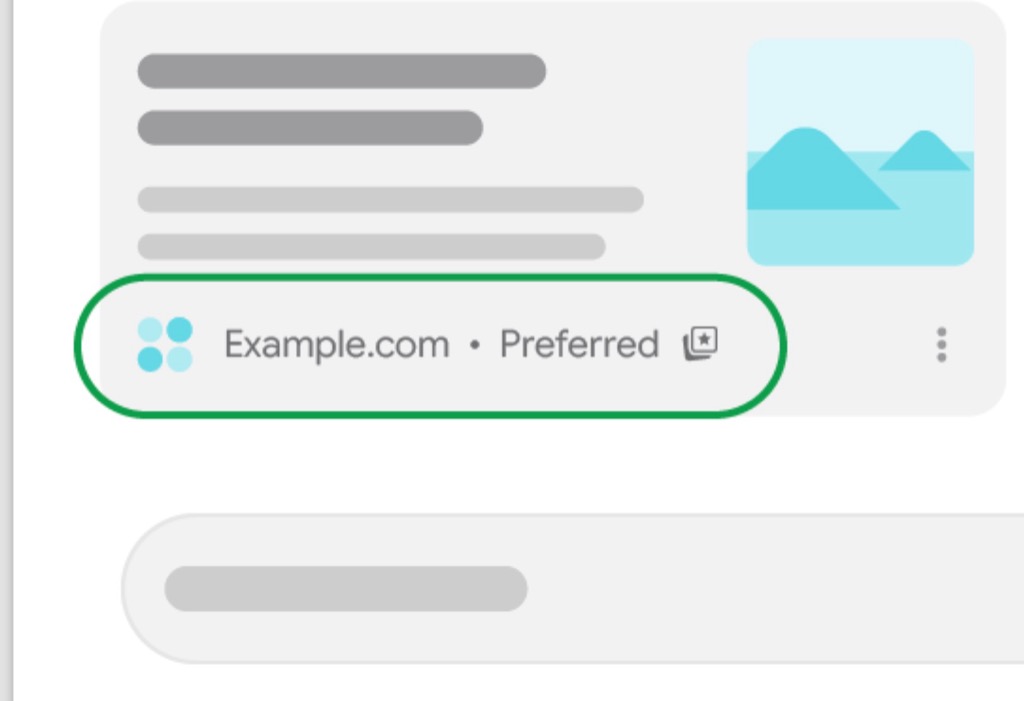
Google rolled out three changes to AI Overviews and AI Mode last week, all aimed at giving users more control over which sources their AI answers pull from.
- Preferred Sources. Users can designate favorite sites, which then get highlighted inside AI Overviews and AI Mode. Google says users are 2x as likely to click through to a Preferred Source, with 345,000+ unique sources added to people’s lists so far.
- Content carousels. New carousels surface timely articles for developing topics, with a separate carousel for firsthand perspectives from forums and social.
- “Highly Cited” badge. Marks articles other stories link to, a real concession to original reporting that’s been getting buried under AI-generated summaries.
The practical move: if you have an audience that uses AI Mode, add a “subscribe to us as a Preferred Source” callout to your content. You’re not going to outrank Wirecutter, but you can be picked by name.
Link: New ways to find your favorite sources and original content in AI Search
One more thing
My co-founder Ryan Castillo has been sharing a lot of great stuff about founder life and marketing on his Twitter. If you’re not following him there, you should.

