

The State of YouTube
in AI Search

A report on how often and where YouTube shows up in AI search results.
Where this data comes from
Every chart on this page is built from real AI responses.
Knowatoa runs queries against the seven major AI platforms for every brand and topic our customers track. When an AI cites a URL in its response, we capture it.
For YouTube specifically, we enrich each citation with channel and video metadata from the YouTube Data API. Figures are aggregated across every brand on the platform.
Get this data applied to your site's competitors and rankings.
Actions to improve visibility
1. Start with the buyer's question
Identify a question that buyers are asking.
2. Make a long form video
88.6% of cited URLs are long-form. Shorts get 10.9%.
3. Focus on one question
83.6% of cited videos answer exactly one question.
4. Teach something valuable
AI cites YouTube most for Learning (6.7%), least for Commercial (3.5%).
5. Don't chase subscribers
~75% of cited channels have under 100K subs. Transcript matters, size doesn't.
6. Directly answer the question
43% of citations are deep-linked. Direct answers earn timestamps and text fragments.
 ChatGPT
 Claude
 Gemini
 Perplexity
 AI Overviews
 AI Mode
 Meta
Meta
Which AIs actually cite YouTube?
Share of all citations from each AI platform that point to YouTube, last 90 days.
What search intents receive YouTube citations?
Share of citations that point to YouTube, broken down by the intent behind the question.
Educational queries: 'how does X work?', 'what is Y?', tutorials and explainers.

Action-oriented queries: sign up, buy, download, request a demo, find a coupon.
"room booking system for Microsoft?"

Research before purchase: 'best X', 'X vs Y', tool comparisons and reviews.

AI doesn't care about subscriber count
Subscriber-count distribution of YouTube channels that AI cited in the last 90 days. The histogram follows a rough bell curve that mirrors the general distribution of which channels publish the most videos on YouTube.
Three real examples of channels under 100 subscribers that AI cited:
"How do Outlook Calendar and Google Calendar compare?"

"How can I achieve marketing mastery?"

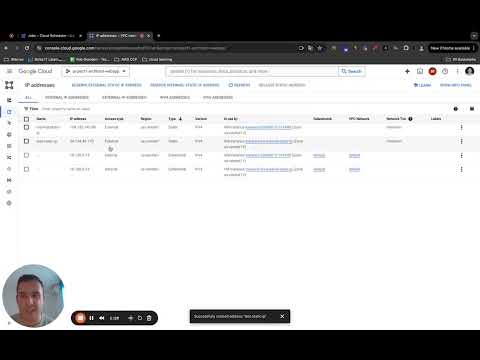
"How do I get a US-only static IP for my cloud app?"
Skip the subscriber chase. Use Knowatoa to jumpstart your content for you.
Enter your domain. Get a custom plan plus AI-citation-ready content for YouTube, your site, and socials. No audience required.
No credit card Takes 60 seconds
Niche videos are cited 17 times more often than broad ones.
Average citations per cited YouTube video, grouped by how many distinct questions AI used the video to answer. Last 90 days.
For content creators: focus on one question at a time. 83.6% of cited videos answer a single question. AI does 17× more total citing on narrow videos than on the rare "ultimate guide" format. The handful of comprehensive videos that earn 170+ citations each are real but rare (0.1% of cited videos).
The proven path is many narrow, well-targeted videos.
Two real videos from the platform showing the contrast:

"What tools improve demand forecasting accuracy without custom code?"

- "How do I auto-protect new WordPress uploads by default?"
- "How do I protect WordPress files stored outside wp-content/uploads?"
- "Can I protect WordPress CSV and JSON files from being downloaded?"
- "How do I protect the WordPress uploads folder?"
- "Can I protect WordPress files and still use caching plugins?"
…and 58 more.
What video formats are cited more often?
Breakdown of cited YouTube URL types in the last 90 days.
Why doesn't this add up to 100%? Citations rarely point to anything but long-form or short videos. But occasionally they do point to channel pages or playlists. Never comments. YouTube loads comments via JavaScript after the page renders, so AI scrapers don't see them. AI only has access to the title, description, and transcript.
Google's AIs deep-link to specific moments in YouTube videos
43% of all YouTube citations include a deep link. AI Mode and AI Overviews use two mechanisms:
- Timestamps (
?t=120) jump to a specific moment in the video. - Text fragments (
#:~:text=...) point to a quoted phrase from the transcript.
The two mechanisms never overlap on the same URL. Per-AI share, last 90 days.
Two real videos AI deep-linked to:
"How can I perform a DMARC email check?"
youtube.com/watch?v=p7ZBwybVzwA&t=46

"Best data science tools?"
youtube.com/watch?v=NVZ8QxTT3hQ#:~:text=Learn essential data science tools: Python, R,,PowerBI, Scikit-learn, TensorFlow, PyTorch, and Hugging Face.

YouTube's share of AI citations is growing
Share of all AI citations across the platform that point to YouTube, by month. Up roughly 54% from 2025-11 to 2026-05.
Putting this report into action
If you want to rank in AI search citations, make a YouTube video on your own channel that is long form and directly answers one specific question. Six things to optimize for, drawn from the data above:
This report won't help you improve your visibility in AI search, but signing up for Knowatoa will.
Enter your domain. Knowatoa finds your gaps, builds the plan, and generates the content you should publish next.
No credit card Takes 60 seconds
1. Start with the buyer's question
Identify a question someone is asking AI that would lead them to your business. If you're not sure, this is exactly the kind of guidance that we provide with Knowatoa.
2. Long form, not Shorts
88.6% of cited YouTube URLs are long-form videos. Shorts pick up only 10.9% of citations.
3. One question per video
83.6% of cited videos answer exactly one question. The "ultimate guide" format earns more citations per piece but only 0.1% of cited videos achieve it. The reliable path is many narrow, focused videos.
4. Lean educational
AI cites YouTube most often for Learning queries (6.71% of citations) and least often for Commercial queries (3.46%). Teach something specific; don't pitch.
5. Don't chase subscribers
About three-quarters of cited channels have under 100K subscribers. AI picks videos by transcript content and topical relevance, not channel size. Publishing from your own channel works even if it's small.
6. Directly answer the question
43% of all YouTube citations include a deep link. Google's AIs jump viewers to specific seconds (timestamps) or quote exact phrases (text fragments) from the transcript. Direct answers earn more precise citations and better placement in AI answers.
Methodology
Citations counted at the URL level. Per-AI, intent, citation frequency, subscriber distribution, and URL type figures cover the 90 days preceding May 24, 2026. Monthly share figures span the prior six months. See "Where this data comes from" at the top of the report for source details.
Knowatoa writes the content that gets cited by AI
Track citations, get a custom plan, and generate the content your brand needs to rank. Free trial, no credit card.